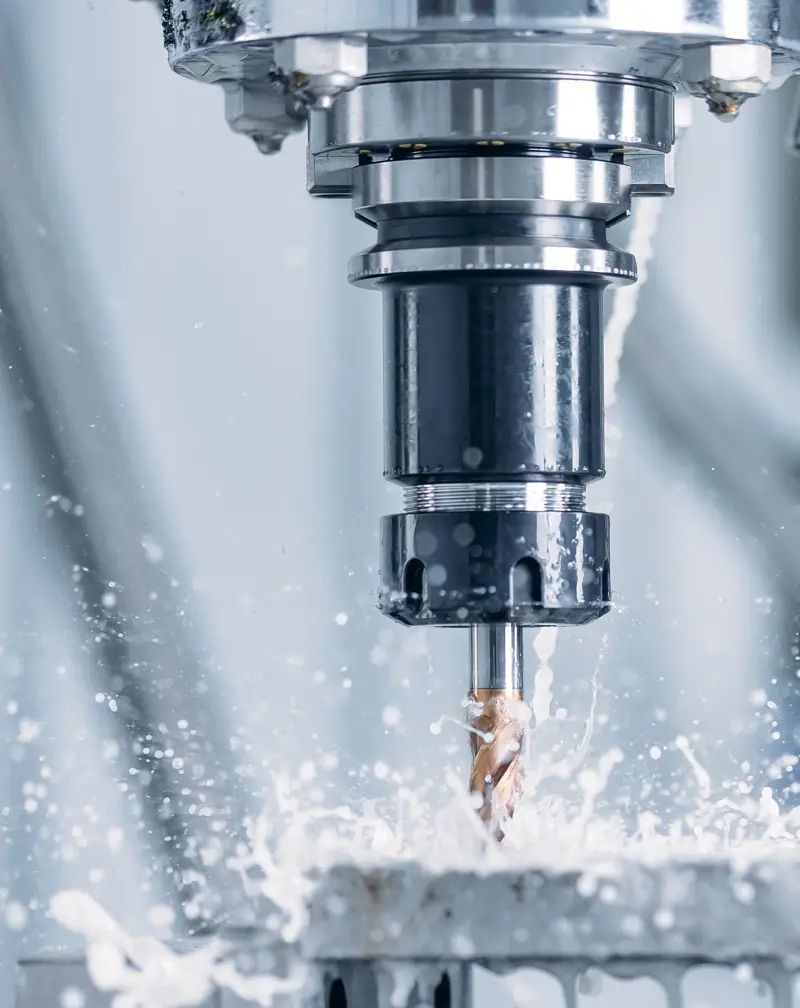
Drilling stainless steel is one of the operations where shops lose the most tools: the drill dulls after a few holes, the hole bottom starts to squeal, long chips pack the flutes, or the tool breaks on exit. In most cases the drill is not simply "bad"; the tool, coolant and cutting strategy do not match the way stainless steel behaves. This guide explains how to choose a solid carbide drill for drilling stainless steel, why internal coolant and chip evacuation matter so much, and how to solve work hardening and built-up edge problems.
Why is stainless steel hard to drill?
- Work hardening: austenitic grades in particular (such as 304 and 316) harden at the surface under plastic deformation. If the drill rubs instead of cutting, a hardened layer forms at the hole bottom, and on the following revolutions the edge has to cut into that layer and wears quickly.
- Low thermal conductivity: heat is not carried away by the chip and the workpiece fast enough, so it concentrates at the cutting edge and the corners. Because a hole is an enclosed space, the effect is stronger than in milling.
- Adhesion (built-up edge): the ductile, sticky material welds onto the edge; when the welded material breaks off, it can take coating and edge with it.
- Long, tough chips: chips that do not break pack in the flutes, scratch the hole wall and cause sudden breakage.
Stainless steels are not one material. Free-machining sulphurised grades (such as 303) break chips more easily, 304/316L austenitic grades are sticky and prone to work hardening, duplex grades need higher cutting forces because of their strength, and hardened martensitic grades should be treated as hard materials. Knowing the exact grade is therefore important when you choose starting data.
Choosing a solid carbide drill for stainless steel
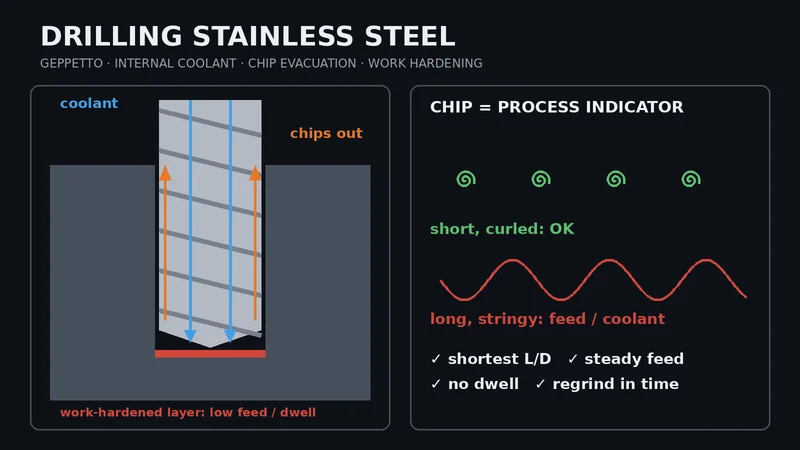
- Internal coolant: the feature that makes the biggest difference. Coolant exits right at the tip, cools the cutting zone and pushes the chips out along the flutes. The deeper the hole, the harder it is for external coolant to reach the tip.
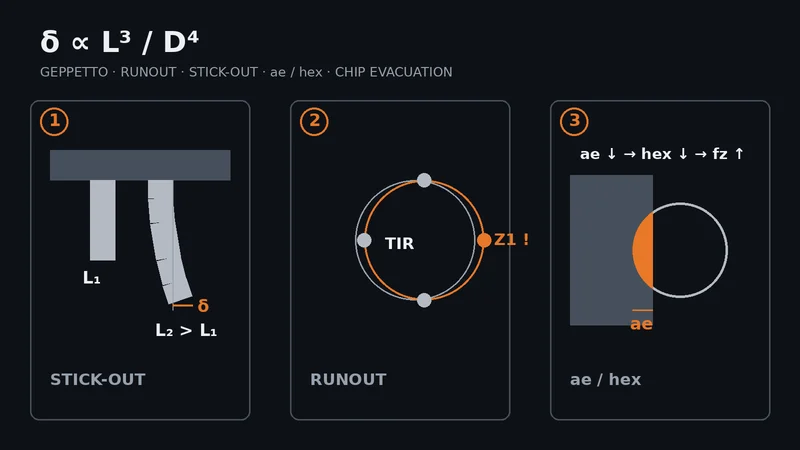
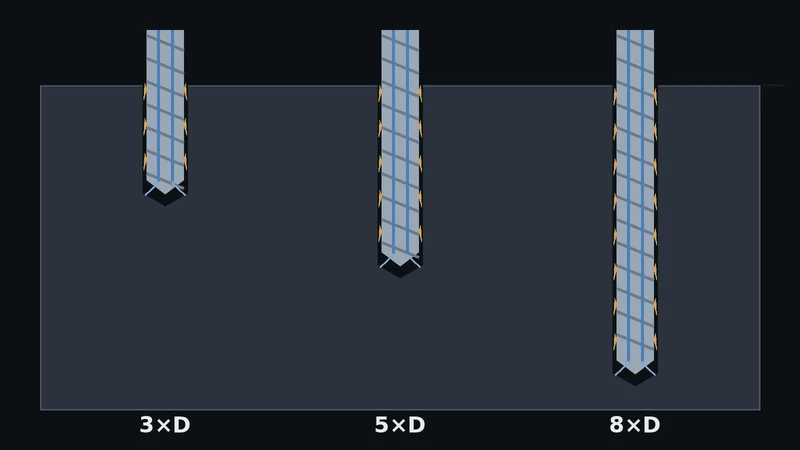
- Length (L/D): use the shortest drill the job allows. A short drill is stiffer, so deflection and the effect of runout are smaller.
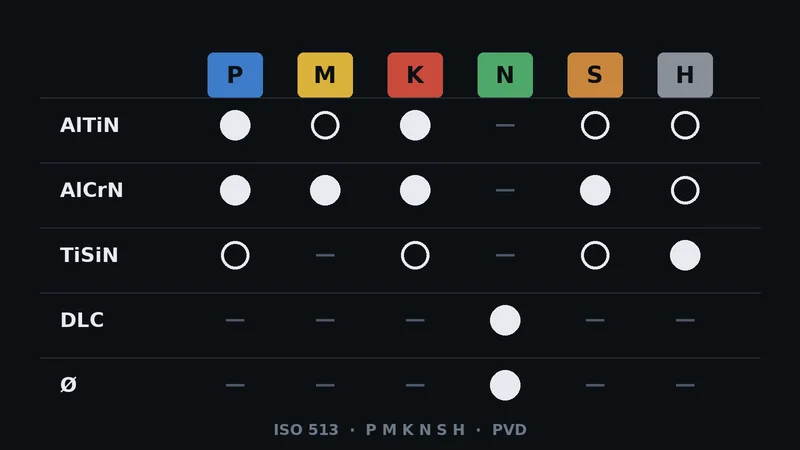
- Edge and coating: stainless needs a sharp cutting edge that is still prepared against micro-chipping, plus a heat-resistant PVD coating. AlTiN and AlCrN are common choices for this material group; see our coatings guide for the selection logic.
- Flute surface: smooth flutes help the chip slide out and reduce adhesion.
Geppetto’s solid carbide drills with internal coolant are suitable for this work: the D32 (3xD), D52 (5xD) and D82 (8xD) series cover Ø3 – Ø20 mm, have 2 flutes and an AlTiN coating, and their product pages list cutting data ranges for the ISO M (stainless) group. If your machine has no through-spindle coolant, see our carbide drills page for externally cooled series.
Internal coolant and chip evacuation
Internal coolant only helps if it reaches the tip with enough pressure and flow. Compare the pressure recommended in the drill catalogue with your machine’s pump capacity; smaller diameters and deeper holes need more pressure. Lubrication matters in stainless too: keep emulsion concentration within the range recommended by the coolant supplier, check it regularly, and filter the coolant well so the small channels do not clog.
The chip is your best process indicator. Short, curled, consistent chips mean a healthy cut. Long, stringy chips usually mean the feed is too low or coolant is insufficient; strong discolouration points to excessive heat. With an internally cooled drill, a peck cycle is usually unnecessary, and every retract and re-entry pushes the edge back into the work-hardened hole bottom. If you have chip problems, correct feed and coolant first and use pecking only as a last resort.
Cutting strategy that prevents work hardening
- Steady, sufficient feed: "slower is safer" does not apply to stainless. Too low a feed causes rubbing, and rubbing causes work hardening. Take starting values from the ISO M range on the product page and calculate speed and feed with our speed and feed calculator; cutting speed is usually lower than for unalloyed steel. Verify the values step by step on your machine.
- No dwell: dwelling at the hole bottom and interrupted feed create a hardened layer. Program blind holes without dwell.
- Correct entry: if you spot drill, the spot angle should not be smaller than the drill point angle; otherwise the corners touch first and may chip. For deep holes (8xD), drill a pilot hole with a short, rigid drill first, enter the pilot at low speed with the long drill, then switch to full data.
- Exit: in thin plates or at breakthrough the drill is suddenly unloaded and the corners can be damaged; reducing feed just before exit helps.
- Runout and holding: use hydraulic, shrink-fit or precision collet holders; runout overloads one edge and makes the hole oversize.
Troubleshooting: symptom, likely cause, fix
- Built-up edge: insufficient cooling or lubrication, or an unsuitable cutting speed. Check concentration and pressure, and adjust cutting speed within the catalogue range.
- Fast corner wear: cutting speed too high or coolant not reaching the tip. Reduce speed and confirm that internal coolant is working.
- Squealing, hardened hole bottom: feed too low or dwell at the bottom. Increase feed, remove dwell and unnecessary pecking.
- Long chips, packed flutes: feed or coolant pressure too low. Correct these two first.
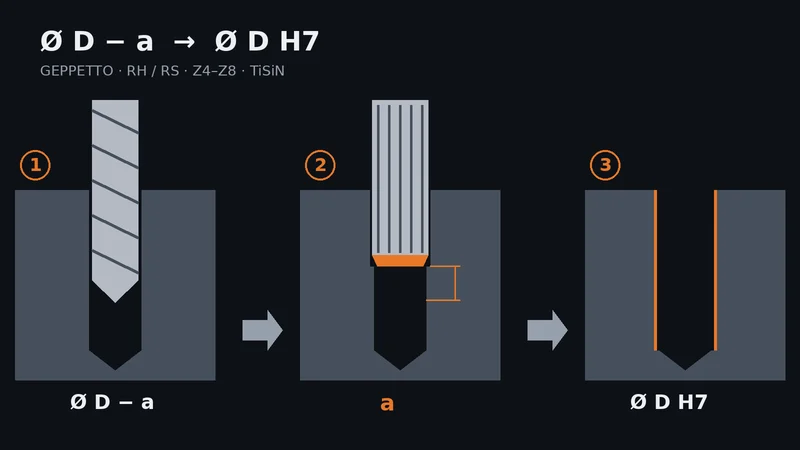
- Oversize hole or poor finish: runout, a worn edge or chips scratching the wall. Measure runout and regrind the tool. If you need a tight tolerance such as H7, finish the hole with a carbide reamer.
- Breakage: chip packing, entry into a hardened surface, runout or an excessively worn tool.
Regrinding and recoating
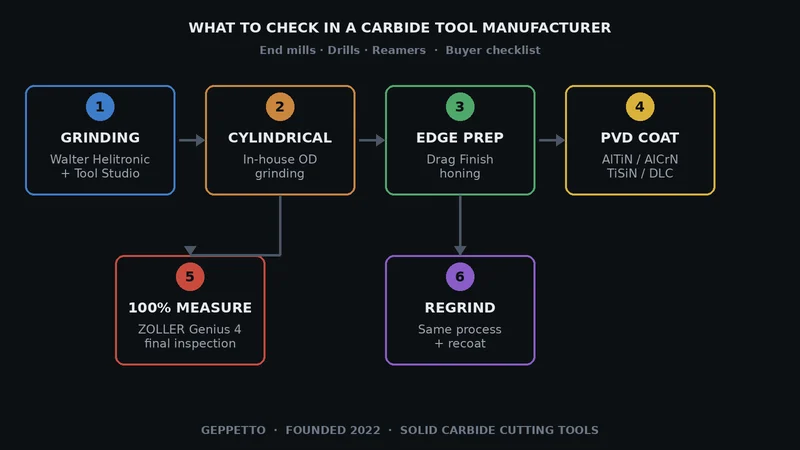
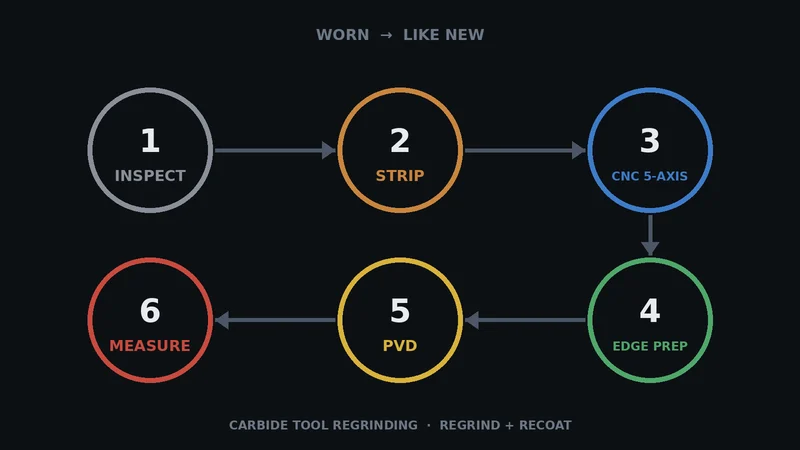
Continuing with a worn drill in stainless increases both heat and work hardening, and the tool usually ends its life with a broken corner. Change the drill when corner wear becomes visible or when you notice more noise or spindle load. A carbide drill removed in time can be reground and recoated and used again. Besides its own tools, Geppetto offers a regrinding and recoating service for carbide tools of any brand, and reground tools are also measured on a ZOLLER Genius 4. For general internal coolant drill selection, read our article on internal coolant drills; for milling stainless, see carbide end mills for stainless steel.
Conclusion
Successful drilling in stainless steel depends on combining the shortest internally cooled carbide drill the job allows, coolant that actually reaches the tip, a steady feed that prevents rubbing, and timely regrinding. Geppetto is a solid carbide tool manufacturer in Turkey: drills are ground on Walter Helitronic machines, 100% inspected on a ZOLLER Genius 4 and supplied as standard series or as special tools to customers in Turkey and abroad. Send us the stainless grade, hole diameter and depth, machine and coolant details, and we will help you choose the series and starting data: contact us, phone +90 216 394 41 10, WhatsApp +90 537 777 96 44, email info@geppetto-tr.com.
Frequently asked questions
Which drill is best for drilling stainless steel?
Where possible, a solid carbide drill with internal coolant and a heat-resistant PVD coating (for example AlTiN or AlCrN), in the shortest length the job allows. If the machine has no through-spindle coolant, an externally cooled carbide drill can be used with plenty of well-directed coolant.
Why does my drill wear out so fast in stainless steel?
The most common causes are work hardening from too low a feed or dwell at the hole bottom, coolant that does not reach the tip, too high a cutting speed and built-up edge. Because of the low thermal conductivity, heat concentrates at the cutting edge.
Do I need a peck cycle when drilling stainless steel?
With an internally cooled carbide drill it is usually unnecessary. Every retract and re-entry pushes the edge back into the work-hardened hole bottom. If you have chip problems, correct feed and coolant pressure first.
How do I prevent work hardening when drilling stainless?
Cut with a steady and sufficient feed, avoid dwell at the hole bottom, do not run worn tools and make sure the coolant reaches the tip. The drill must cut the material, not rub it.
What cutting speed and feed should I use for stainless steel?
There is no single correct value; it depends on the grade, diameter, hole depth and machine. Start from the drill’s catalogue range for the ISO M (stainless) group, calculate speed and feed, and verify them step by step on the machine.
Can carbide drills used in stainless steel be reground?
Yes. A carbide drill removed in time, before it breaks, can be reground and recoated. Geppetto regrinds and recoats carbide tools of any brand.