
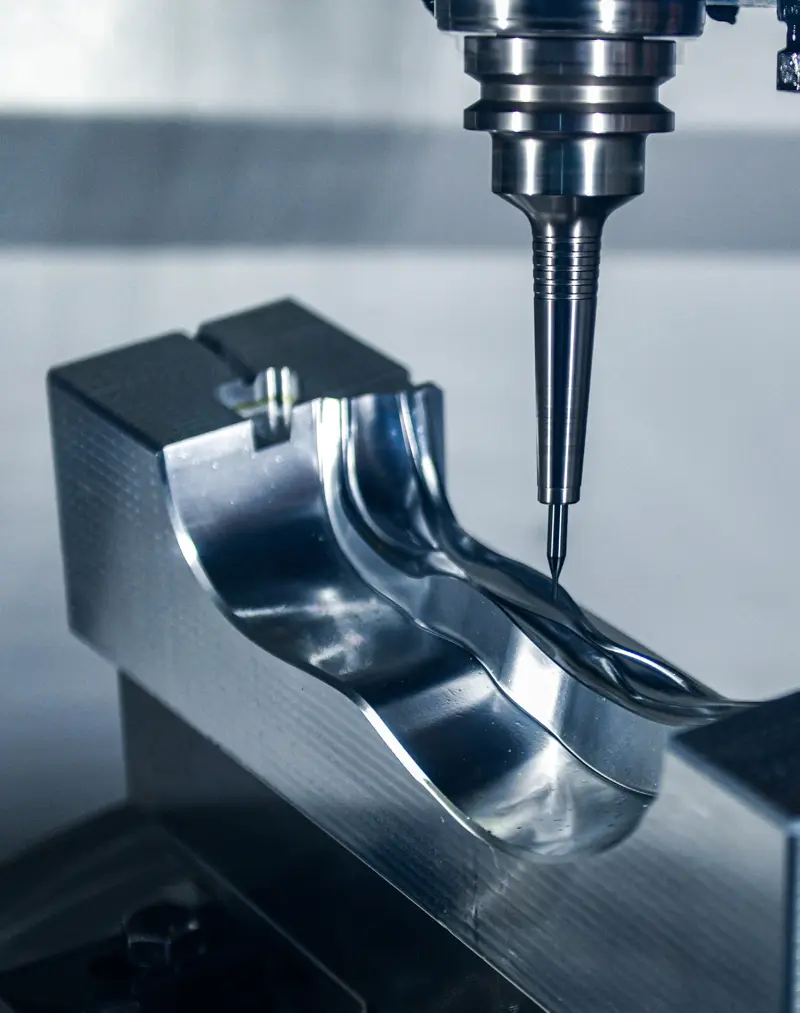
Carbide tool regrinding guide
What you need to know about regrinding carbide end mills, drills and reamers: when to send them, how many times they can be reground, what happens in the process and how to prepare a shipment.
The body of a worn solid carbide tool is usually still sound – what wears out are the cutting edges and the coating. With correct regrinding and recoating the tool can be used again with its original geometry.
This guide explains step by step how carbide tool regrinding is done, when an end mill should be reground and what to prepare when you send tools for regrinding.
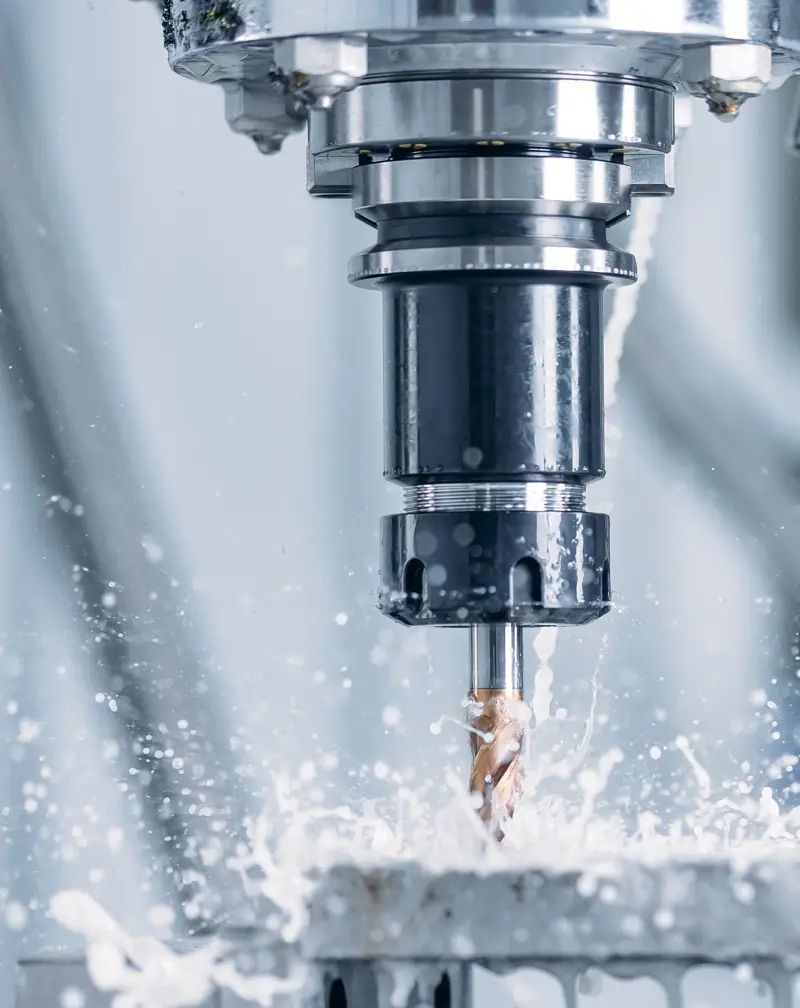
How is a carbide tool reground?
Incoming inspection and wear analysis
Each tool is inspected individually: wear land, chipped or broken edges and the coating condition. Tools that are not worth regrinding are reported to you.
CNC grinding to the original geometry
Regrinding is done on a Walter Helitronic Mini Power CNC tool grinding machine programmed with Walter Tool Studio. End and peripheral edges, angles and clearances are reground based on the original tool geometry.
Drag Finish edge preparation
The cutting edges are rounded in a controlled way at micron level. Micro-burrs left by grinding are removed, improving edge strength and coating adhesion.
PVD recoating
Because regrinding removes the coating on the edges, the tool can be recoated with AlTiN, AlCrN, TiSiN or DLC depending on the workpiece material.
Final check on ZOLLER Genius 4
Every tool is measured on a ZOLLER Genius 4 tool measuring machine – diameter, angles and geometry – before shipping.
When should an end mill be reground?
- When surface finish deteriorates or burrs start forming on the part
- When cutting noise, vibration or spindle load increase noticeably
- When dimensional deviations and out-of-tolerance parts appear
- When a visible wear land, coating peeling or small chips appear on the cutting edge
Tip: do not run a tool until it breaks or the edges are heavily chipped. Less material has to be removed from a tool sent in time, so it can be reground more often.
How many times can a carbide tool be reground?
There is no fixed number: tool type, diameter, amount of wear and the dimensional tolerance of the application decide. Each regrind removes some material, so diameter and cutting length become slightly smaller.
Roughing tools with wide tolerances can usually be reground more often; close-tolerance reamers and precision end mills reach their limit sooner. We assess each tool at incoming inspection and tell you in advance if a tool is not worth regrinding.
What should you send for regrinding?
- Tool type (end mill, drill, reamer, step or special tool) and quantity
- Product code, catalogue data or the original drawing if available
- Workpiece material and preferred coating
- A photo of the worn edges (for a first assessment)
- Size requirement: must the diameter be kept, or is a reduced diameter acceptable?
- Pack the tools individually in protective boxes or sleeves so they do not touch each other
How long does regrinding take?
It depends on tool type, quantity and whether recoating is needed. Once we have the details of your tools we give you an estimated lead time. If you need regrinding regularly, we can plan it together.
Frequently asked questions
What is carbide tool regrinding?
Regrinding means re-grinding the worn cutting edges of solid carbide end mills, drills and reamers on a CNC tool grinding machine to their original geometry, usually followed by edge preparation and recoating.
Does a reground end mill perform like a new one?
A tool reground to its original geometry, edge-prepared and recoated gives cutting performance close to a new tool. Because the diameter becomes slightly smaller, the tool is measured on a ZOLLER Genius 4 and these values should be considered for size-critical work.
How many times can a carbide end mill be reground?
There is no fixed number. Tool type, diameter, amount of wear and the tolerance of the application decide. Sending tools in time is the most effective way to get more regrinds.
Is recoating needed after regrinding?
Regrinding removes the coating on the edges. For most applications PVD recoating is recommended for tool life; the coating (AlTiN, AlCrN, TiSiN, DLC) is chosen for the workpiece material.
Which tools do you regrind?
We regrind solid carbide end mills (square, corner radius and ball nose), carbide drills, reamers and step/special tools.
Why is Drag Finish applied after regrinding?
Grinding leaves micro-burrs on the cutting edge. Drag Finish removes them and rounds the edge in a controlled way, reducing the risk of micro-chipping and improving coating adhesion.
How long does regrinding take?
It depends on tool type, quantity and coating needs. Once we have your tool details we give you an estimated lead time.
How do I get a quote for regrinding?
Send the tool type, quantity and, if possible, a photo of the worn edges by e-mail (murat@geppetto-tr.com) or WhatsApp (+90 537 777 96 44) and we will get back to you.
Send your tools for regrinding
Send tool type, quantity and a photo of the worn edges; we will get back to you about regrinding and recoating.