A new end mill snaps after a few parts, chatter marks appear on the wall, or the tool is worn out long before it should be. The first reflex is usually to switch brand or coating. In practice, most of these problems do not come from the tool itself but from holding, stick-out, cutting strategy and chip evacuation. This guide shows how to diagnose carbide end mill breakage, chatter and premature wear systematically, and in which order to check things before you buy a different tool.
Read the damage first
Before you throw a broken or worn tool away, look at it under a magnifier. The failure pattern points to the cause:
- Snapped at the neck or where the flutes start: overload, chip packing or excessive stick-out. Typical in full slotting and deep pockets.
- Small chips along the cutting edge (micro-chipping): vibration, runout, interrupted cuts, or an edge that is too sharp for the job.
- Broken corners: a sharp corner is the weakest point in hard materials; a corner-radius tool or a lower feed may be needed.
- Even wear land on the flank: normal wear. If it grows very quickly, cutting speed is too high or the coating does not suit the material.
- Material welded to the edge (built-up edge): common in aluminium and stainless steel; related to coolant, cutting speed and the choice of coating or polished flutes.
1. Runout and tool holding
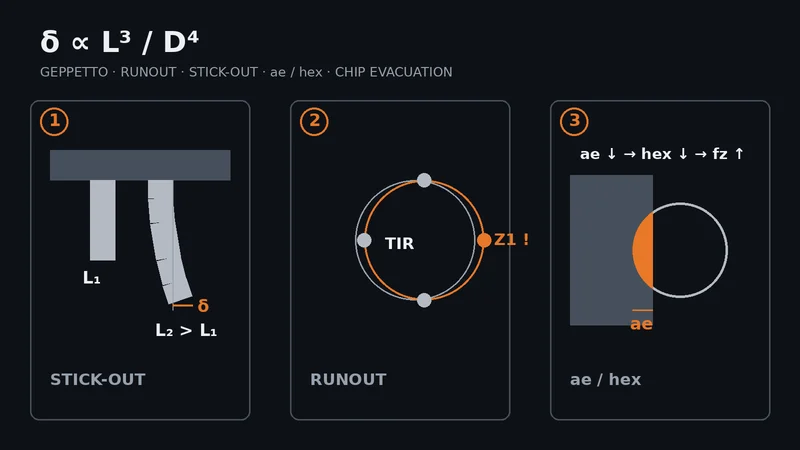
Runout makes one flute do most of the cutting: that flute is overloaded and chips while the others barely cut. Use precision collet, hydraulic or shrink-fit holders, keep collets, nuts and tapers clean, and check runout at the tool tip on the machine with a dial indicator. Tools made and reground at Geppetto are measured on a ZOLLER Genius 4, but runout from the holder and spindle can only be measured on the machine. Loose workholding and thin-walled parts that flex are also frequent sources of chatter.
2. Stick-out: the most effective lever
An end mill behaves like a cantilever beam loaded at its tip. Simple beam theory says deflection grows roughly with the cube of the stick-out length and falls with the fourth power of the diameter. So even a small reduction in stick-out makes the setup noticeably stiffer. Clamp the tool as deep as clearance allows, and for deep pockets prefer a tool with a reduced neck instead of an unnecessarily long flute length. If a long tool is unavoidable, reduce depth of cut and feed accordingly.
3. Strategy: ae, ap and chip thinning
Full slotting (ae = D) wraps the tool in material and makes chip evacuation hardest. Where possible, machine pockets with trochoidal or dynamic milling: small radial engagement (ae) and large axial depth (ap), which spreads load and heat along the flute length. Note that a smaller ae also thins the actual chip. If feed is not increased accordingly, the tool rubs instead of cutting, heats up and dulls quickly. Climb milling is generally better for edge life. Don’t guess the start values: begin within the catalogue range and calculate speed and feed with our speed and feed calculator.
4. Chip evacuation and coolant
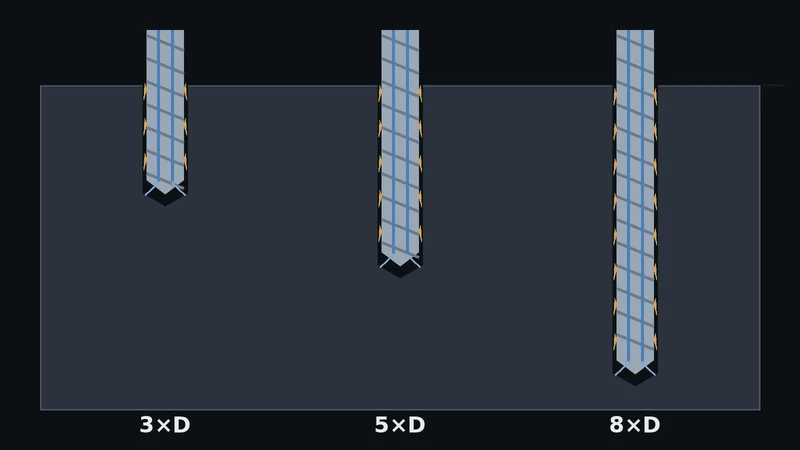
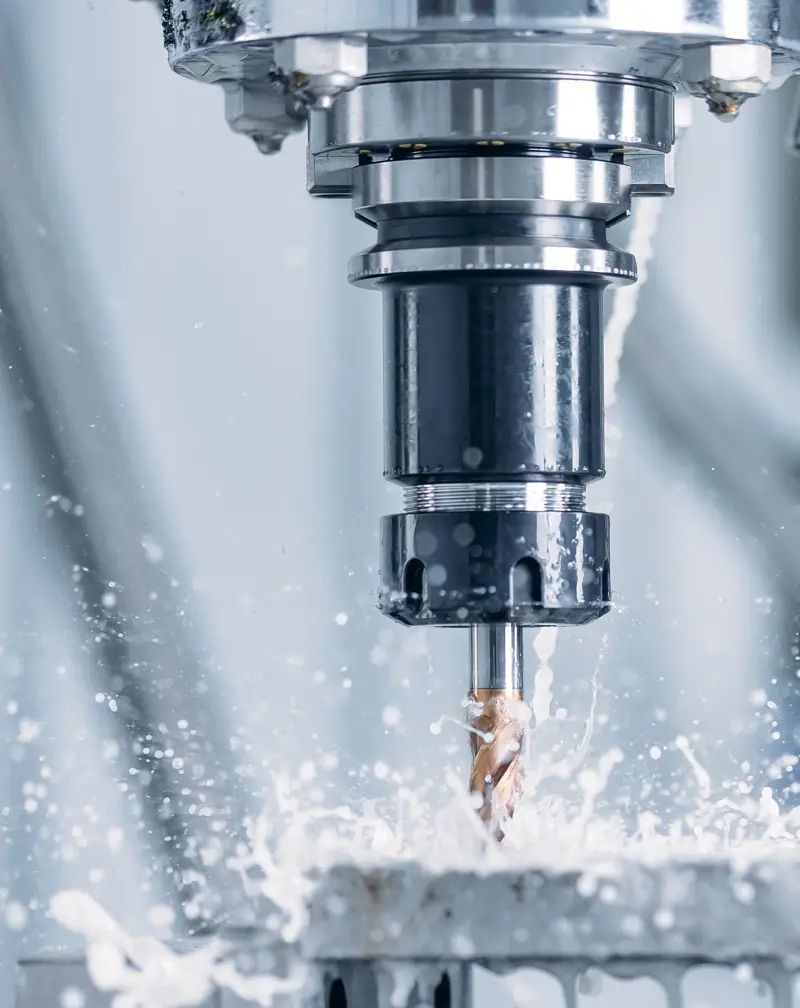
Chips packed in the flutes are the classic cause of sudden breakage. In deep pockets and slots, flush chips away with plenty of coolant or compressed air. Flute count matters here too: Z2–Z3 with large chip space for aluminium, stiffer Z4 and above for steel. In hard materials, intermittent or insufficient coolant can cause thermal cracks on the edge; use either generous, continuous coolant or dry machining with air blast.
5. The right tool, coating and edge for the material
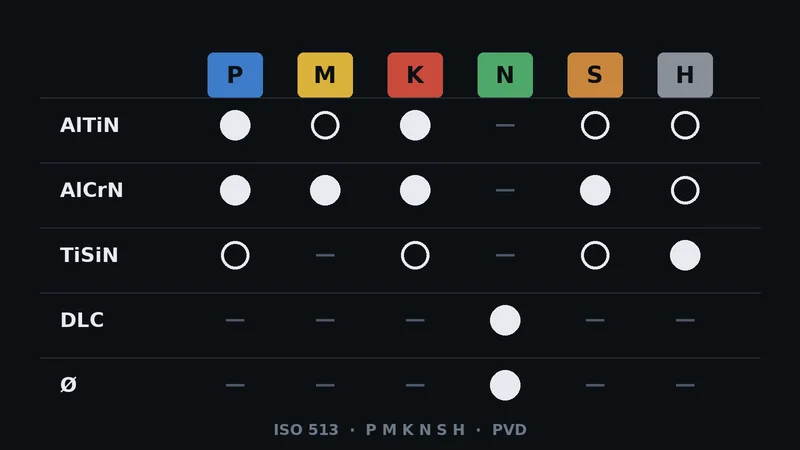
Stainless steel, aluminium and hardened steel need different helix angles, flute counts and coatings; the wrong choice causes early failure even with good cutting data. For material-specific selection see our pages on end mills for stainless steel, aluminium and hardened steel, and roughing end mills for high material removal. Coating choice is covered in our coatings guide, and edge preparation that reduces micro-chipping in our drag finish article.
6. Monitor wear and regrind on time
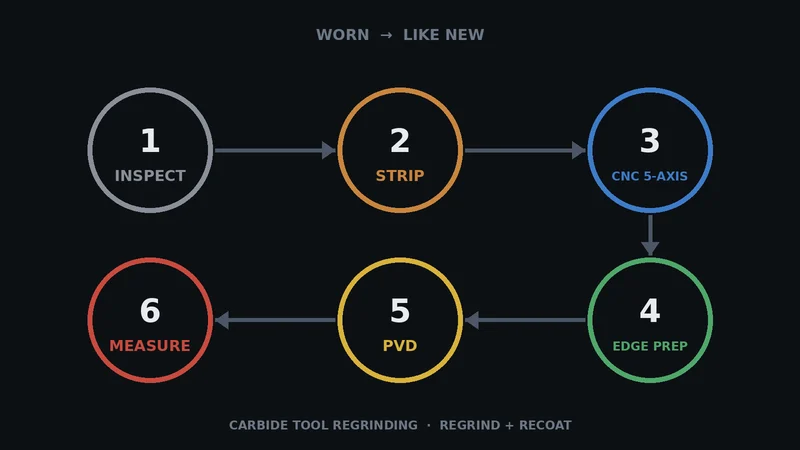
A dull edge raises cutting forces and heat; chatter and breakage often start on a worn tool. Instead of running a tool until it breaks, change it when the wear land becomes clearly visible or surface finish drops. A tool removed before it breaks can usually be reground and recoated; a broken one mostly cannot. See our regrinding guide and regrinding service page. We regrind and recoat carbide tools of any brand, including for customers abroad.
Quick checklist
- Chatter marks: shorten stick-out, measure runout, reduce ae, change spindle speed in steps, check workholding.
- Sudden breakage: chip packing, too much ap in full slots, plunge or ramp angle, worn tool.
- Micro-chipping: runout, vibration, interrupted cuts, edge preparation.
- Fast wear: cutting speed, coating-to-material match, coolant, rubbing at too low a feed.
- Built-up edge: coolant, polished flutes or a suitable coating, cutting speed.
Conclusion
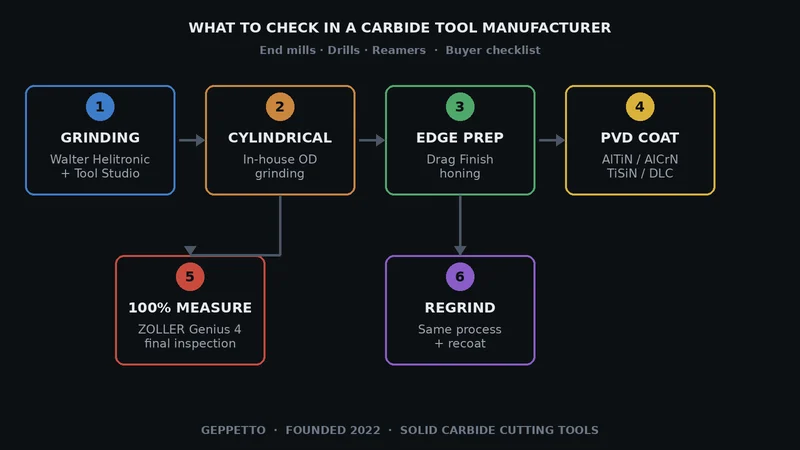
Breakage and chatter rarely have a single cause. Reading the damage, then checking runout, stick-out, strategy and chip evacuation in that order, usually solves the problem faster than changing tools. Geppetto is a solid carbide end mill manufacturer in Türkiye, grinding tools on Walter Helitronic machines and inspecting every tool on a ZOLLER Genius 4; see our carbide end mill range, or send us the material, tool diameter, stick-out, machine and cutting data of the problem operation and we will review it with you: contact us, phone +90 216 394 41 10, WhatsApp +90 537 777 96 44, email info@geppetto-tr.com.
Frequently asked questions
Why do carbide end mills break?
The most common causes are chip packing, overload (especially in full slotting), long stick-out, runout and continuing to cut with a worn tool. The location and shape of the fracture show which one dominates.
How can I reduce chatter in milling?
First shorten the stick-out and measure runout; then reduce radial engagement (ae), change spindle speed in steps and check workholding. If a long reach is unavoidable, use a tool with a reduced neck.
Why should feed increase when ae is small?
With smaller radial engagement the actual chip gets thinner. If feed is not increased, the tool rubs instead of cutting, heats up and dulls quickly. Start from the catalogue range and the calculator.
Will a different coating stop breakage?
Coating affects wear and built-up edge, but it will not by itself cure breakage caused by runout, stick-out or chip packing. Remove the mechanical causes first.
Can a broken carbide end mill be reground?
Usually not if the damage is large. That is why it pays to send tools for regrinding when wear becomes visible, before they break. Geppetto regrinds and recoats carbide tools of any brand.