
Why tool selection matters
In machining, the choice of cutting tool directly affects cycle time, tool life, surface finish and therefore cost per part. Thanks to their hardness, wear resistance and ability to run at high cutting speeds, solid carbide end mills are among the most widely used tools in CNC machining.
Carbide grade
Not all carbide is the same. Grain size and cobalt content determine how well a tool resists impact and heat. Fine-grain (micrograin) carbide grades offer a good balance between edge sharpness and toughness and help reduce micro-chipping.
How flute count (Z) affects machining
- Z2: large chip space; suited to aluminium, soft materials and slotting.
- Z3: balances chip space and stability in aluminium and general steels; often chosen for semi-finishing.
- Z4 – Z6: used on steels and hardened materials and for finishing at higher feed rates with good surface quality. Chip space is smaller and the tool core is more rigid.
Material group and coating
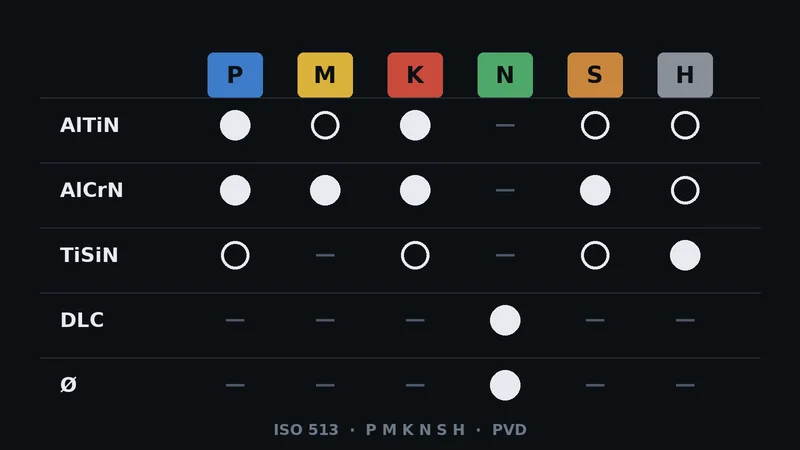
Steel, stainless steel, cast iron, aluminium, heat-resistant alloys and hardened steels each require a different geometry, helix angle and coating. For example, AlTiN is preferred at high cutting temperatures and TiSiN on hard materials, while uncoated tools with polished flutes are common in aluminium to reduce built-up edge.
Conclusion
The right tool only pays off when combined with the right speed, feed and depth of cut (ap/ae). Browse our product range or contact our technical team to find the series that fits your material and machine.