Bearing seats, dowel pin holes, valve bodies, mould guide bores – wherever a drawing calls for H7, the job usually ends with a solid carbide reamer. But reaming does not rescue a poor pre-drilled hole: the reamer follows the hole it is given and brings it to final size and surface finish. This guide covers what to check to hit H7 on the first part, and where to look when holes come out oversize, undersize or tapered. It is written for production engineers and buyers sourcing carbide reamers, including those evaluating a carbide tool manufacturer in Turkey.
What reaming fixes – and what it does not
A reamer improves diameter, roundness and surface finish. It does not significantly correct hole position or straightness, because the tool follows the pre-drilled hole. If the position tolerance is tight, start with spot drilling and, where needed, correct the hole by helical interpolation or an intermediate boring step before reaming. Expecting the reamer to fix a position error is one of the most common process-planning mistakes.
1. Pre-drilling: half the result comes from the drill
The pre-drilled hole should be straight, on position and free of work hardening. In stainless steel, a worn drill work-hardens the hole wall and the reamer then struggles to cut that hard skin. A good carbide drill with proper coolant directly affects reamer life. See our internal-coolant carbide drill guide; Geppetto D32 and D52 series are also used as pre-drills for reaming.
2. Reaming allowance: not too little, not too much
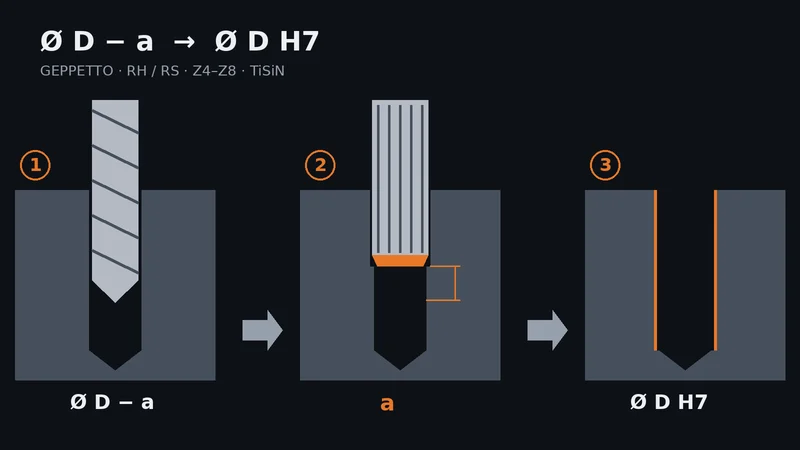
The reaming allowance (a in the diagram) is the difference between the pre-drilled diameter and the reamer diameter. In practice it is in the order of tenths of a millimetre on diameter and grows with hole size; the exact value depends on the material, the reamer type and the tool maker’s data.
- Too little stock: the reamer rubs instead of cutting, the edge dulls quickly and the hole may look shiny yet stay undersize or scatter.
- Too much stock: cutting load and heat rise, the flutes pack with chips, the hole grows and the risk of edge chipping increases.
Checking the first part with a plug gauge or precision bore gauge and adjusting the allowance accordingly is the safest approach.
3. Runout and clamping
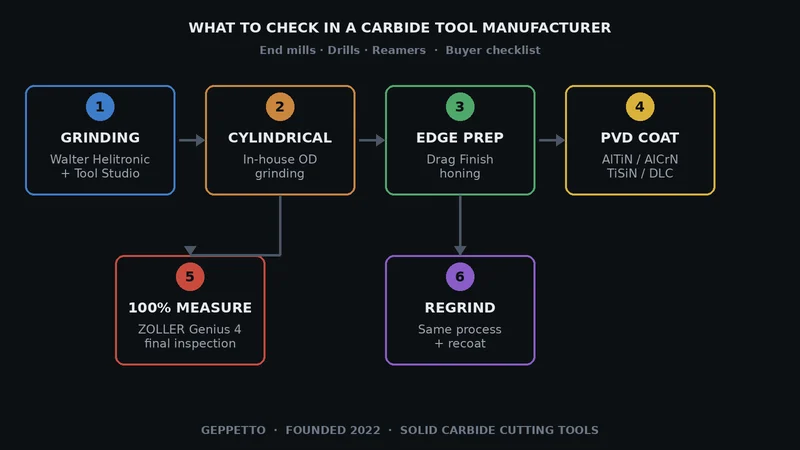
With reamers, runout turns directly into oversize. Use precision collet, hydraulic or shrink-fit holders, keep collets and tapers clean, and check runout at the tool tip on the machine with a dial indicator. Every tool Geppetto produces or regrinds is measured on a ZOLLER Genius 4, but runout from the holder and spindle still has to be checked on the machine. Misalignment between workpiece and spindle axis also causes tapered holes and bell-mouthed entries.
4. Flute count, flute direction and hole type
Geppetto RH and RS reamers come with 4 to 8 flutes depending on diameter. More flutes generally improve roundness and finish but reduce chip space. Flute direction matters too: left-hand spiral flutes push chips ahead and suit through holes, right-hand spiral flutes pull chips back and suit blind holes, while straight flutes are a common general-purpose choice. In blind holes, chips packing at the bottom spoil the finish, so leave enough clearance below the reamed depth.
5. Coolant and cutting data
Plenty of well-filtered coolant clears chips and prevents built-up edge, which is what keeps hole size stable in aluminium and stainless. Do not guess cutting data: start from the min–max range in the catalogue tables and calculate speed and feed with our speed and feed calculator. If the feed is set too low, the reamer can slip back into rubbing.
6. Quick troubleshooting
- Hole oversize: check runout, excessive allowance, built-up edge and axis misalignment.
- Hole undersize or closing up: allowance may be too small or the reamer worn; some materials spring back after cutting. Measuring a warm part also misleads – re-measure once it has cooled.
- Tapered hole or bell-mouthed entry: misalignment, runout or an inclined pre-drilled hole.
- Scratches or chatter marks: chip packing, insufficient coolant, a worn lead chamfer or lack of rigidity.
- Edge chipping: excessive allowance, interrupted cuts (cross holes) or a hardened pre-drilled wall.
7. Coating, regrinding and tool life
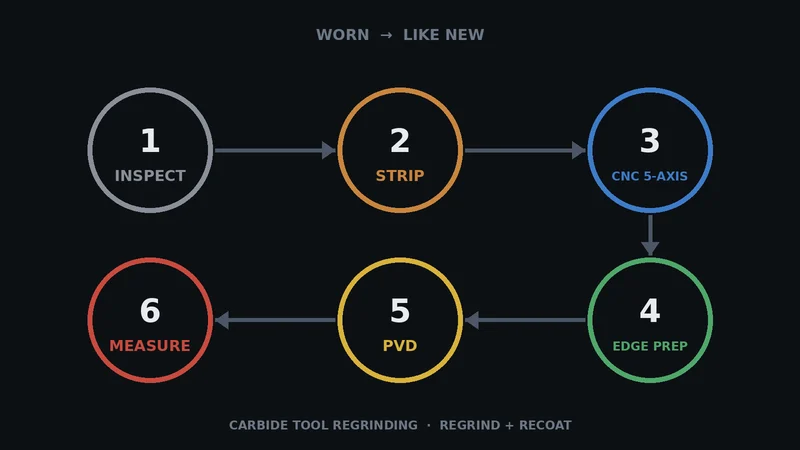
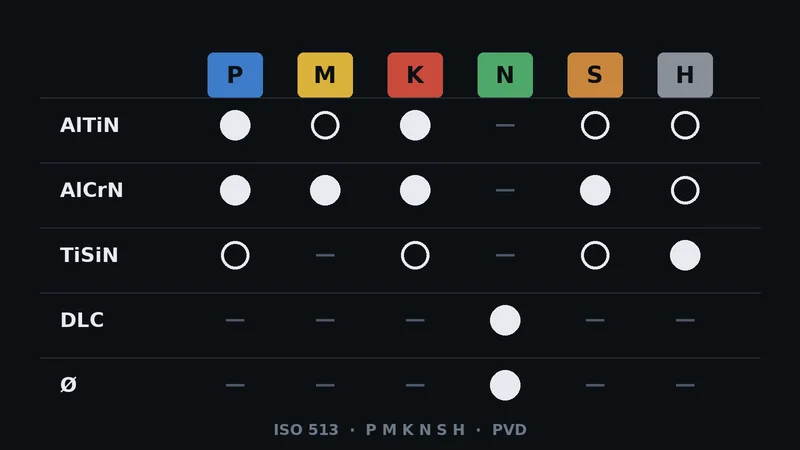
Geppetto RH and RS reamers are TiSiN coated. Reamers can be reground, but because the sizing diameter must be preserved, regrinding is usually limited to the lead chamfer and a reamer reaches its regrind limit sooner than an end mill. It therefore pays to send reamers for regrinding at the first sign of size drift or finish deterioration rather than running them completely dull. See our regrinding guide and regrinding service.
Geppetto solid carbide reamers
The RH and RS series cover Ø2–Ø20 mm, are listed as D/H7 in the catalogue and include intermediate sizes. For diameters, lengths or step reamers that are not listed, we grind special tools to your drawing and ship them to customers abroad. Dimension tables are on our solid carbide reamers page.
Conclusion
An H7 hole is the result of a good pre-drilled hole, the right allowance, low runout, suitable flute design and good coolant. If you have a problem hole, send us the material, diameter, depth, blind or through, and machine type and we will look at it with you: contact us, phone +90 216 394 41 10, WhatsApp +90 537 777 96 44, email info@geppetto-tr.com.
Frequently asked questions
Does a reamer correct hole position?
Not significantly. A reamer follows the pre-drilled hole; position and axis errors must be corrected in pre-drilling or by an intermediate step before reaming.
How much reaming allowance should I leave?
In practice it is in the order of tenths of a millimetre on diameter and increases with size. Choose the exact value from the material and tool data and confirm it on the first part.
Why is my H7 hole oversize?
The most common causes are runout, excessive allowance, built-up edge and misalignment between workpiece and spindle.
Which reamer is best for blind holes?
Right-hand spiral flutes that pull chips back are an advantage in blind holes; leave enough clearance at the bottom for chips.
Can solid carbide reamers be reground?
Yes, but because the sizing diameter must be kept, regrinding is usually limited to the lead chamfer. Geppetto measures reground tools on a ZOLLER Genius 4 and can recoat them.
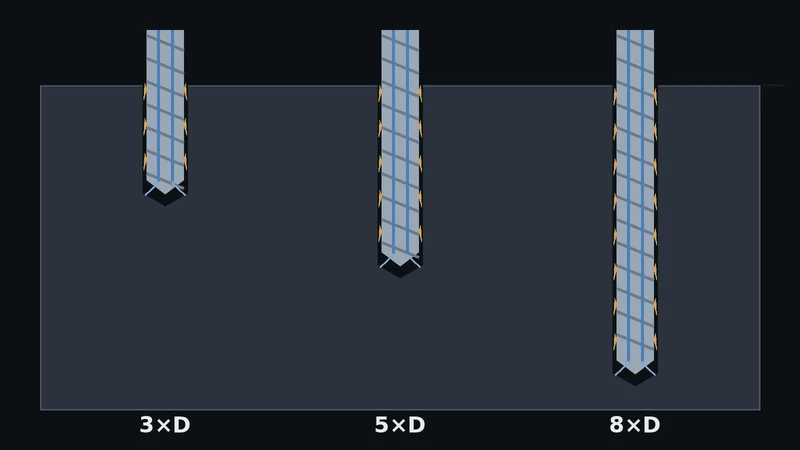
For the pre-drilled hole: A straight, accurately sized pre-drilled hole directly affects the reaming result. You can find the internal coolant D32 (3×D) and D52 (5×D) drills and series selection on the internal coolant carbide drills page; for worn reamers see our regrinding service.