Aluminium is often called “easy to machine”, yet the most common shop-floor problem is not breakage but built-up edge. Material welds onto the cutting edge, spoils the surface, throws the size out and eventually tears a corner with it. This article explains why BUE forms in aluminium milling, what to look for in a carbide end mill for aluminium, the starting data from the 2026 catalogue, and how coolant and chip evacuation help.
What BUE is and what it does to the part
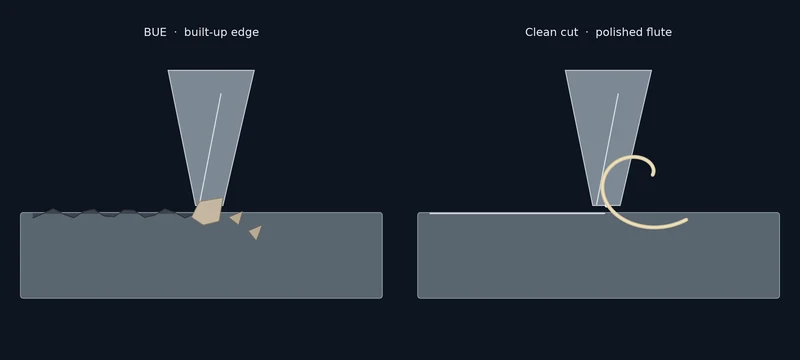
Built-up edge is ductile material welding onto the cutting edge in spots. The deposit cuts for a while as a “false edge”, then breaks off and often takes coating or a micro-edge with it. Typical signs are:
- Scratches, shiny-dull patches or irregular marks on the surface
- Size drift; pockets or holes going out of tolerance with the same tool
- Chips stuck on the edge, micro-chipping at the corner, early edge breakdown
- A change in sound and uneven spindle load
Aluminium is not one material. Wrought and plate alloys with less than about 10% silicon tend to be stickier; high-silicon casting alloys are more abrasive and need a different cutting speed. That split also appears in the catalogue cutting data.
Why adhesion occurs
- Wrong geometry: A low helix, too many flutes and a rough flute surface hold the chip in the gullet. In aluminium the chip must leave quickly.
- A dull or damaged edge: An edge that rubs instead of cutting raises heat and makes welding easier.
- Cutting speed too low: Slowing down “to be safe”, as one might in steel, can increase built-up edge in aluminium.
- Poor coolant and recutting: Chips left in a pocket are recut, scratch the surface and stick to the edge.
Choosing a carbide end mill for aluminium
- Flute count: Two or three flutes leave a wider gullet. A general-purpose 4-flute steel mill should not be the first choice in aluminium.
- High helix and a sharp edge: A high helix lifts the chip and a sharp, prepared edge reduces rubbing.
- Polished flutes: A smooth flute face helps the chip slide away.
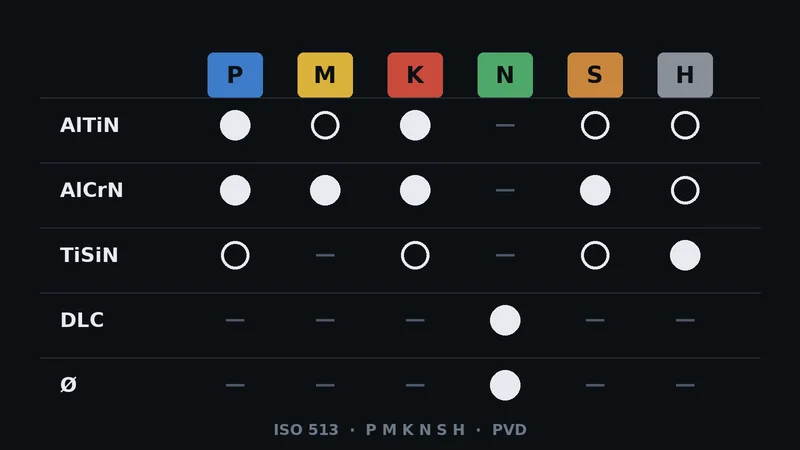
- Coating: A polished, uncoated carbide end mill is often preferred in aluminium; geometry and surface finish do most of the work against adhesion. The general logic of coatings is in our coating guide.
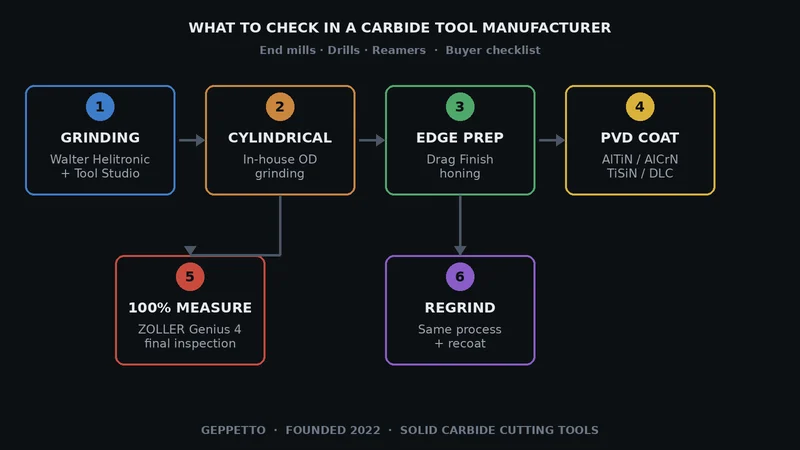
Geppetto’s carbide end mills for aluminium are made for this use. In the 2026 catalogue the AS series and the long ASL series are 3-flute polished aluminium mills; the family also includes MPA and MA. For a broader overview see the carbide end mills page.
Starting data from the catalogue
The figures below are taken from the AS table on page 142 of the 2026 catalogue. They are starting recommendations to be confirmed on your machine, fixturing, tool length and coolant — not invented test results.
- Aluminium Si < 10%: cutting speed Vc = 700 m/min
- Aluminium Si > 10%: cutting speed Vc = 300 m/min
Example: Ø10 AS, 3 flutes, aluminium Si < 10%, shouldering. Catalogue: Vc = 700 m/min, fz = 0.10 mm/tooth, ap = 10 mm, ae = 5 mm. Formulae: n = (Vc × 1000) / (π × D) and Vf = n × Z × fz. This gives n ≈ 22,280 rpm and Vf ≈ 6,685 mm/min. For slotting at the same diameter the catalogue gives fz = 0.08 mm/tooth. For Si > 10% shouldering at the same diameter use Vc = 300 m/min and fz = 0.08 mm/tooth.
You can also run the speeds in our speed-and-feed calculator and confirm them step by step on the machine. If vibration or adhesion starts, reduce speed and feed in the same proportion. Cutting only the feed can increase rubbing and built-up edge in aluminium.
Coolant and chip evacuation
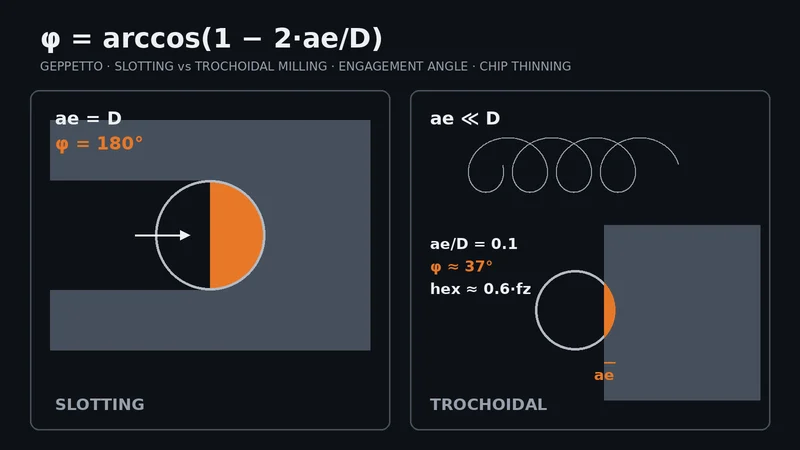
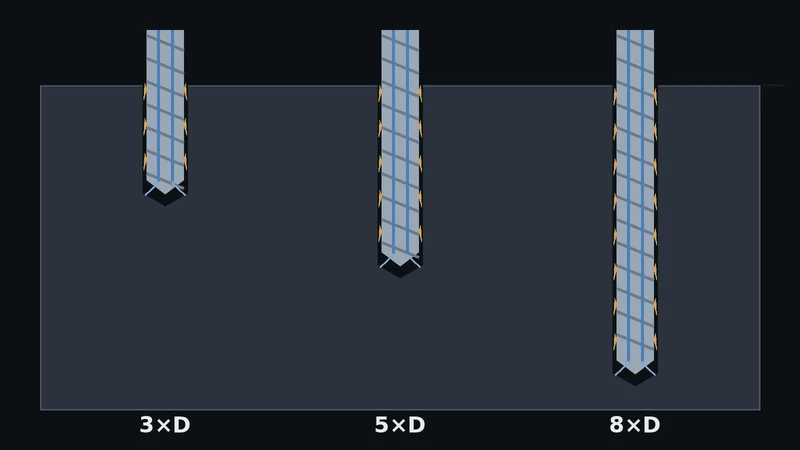
In aluminium, coolant is not only for heat: it must move the chip away from the cut. Generous, well-aimed emulsion is usually first choice for roughing and pocketing. For fine finishing, compressed air can also clear chips if the part and machine allow it; the choice depends on the surface requirement and whether chips are packing in the pocket. Do not leave chips in the pocket: toolpaths, retracts and the jet of coolant or air should carry them out. In deep pockets a trochoidal or low-engagement path can reduce chip load and recutting; we cover this in the trochoidal milling article.
Troubleshooting
- Chips packing on the edge: The tool may be wrong for aluminium (low helix, too many flutes, rough gullets) or the cutting speed may be too low. Choose a suitable series, move towards the catalogue Vc, and keep the flutes clear.
- Poor surface, pulled marks: Chips are being recut or the edge is no longer sharp. Improve evacuation and change the tool in time for regrinding.
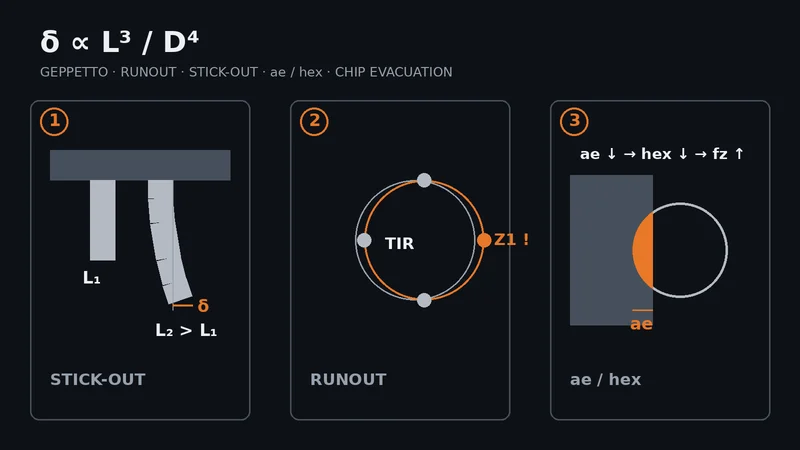
- Corner chipping: A built-up layer tearing off, runout, or too large a radial depth of cut. Measure runout and do not exceed the catalogue ae.
- Size going off: BUE changes the effective diameter of the edge. Clear the adhesion and continue with a sharp tool.
Regrinding
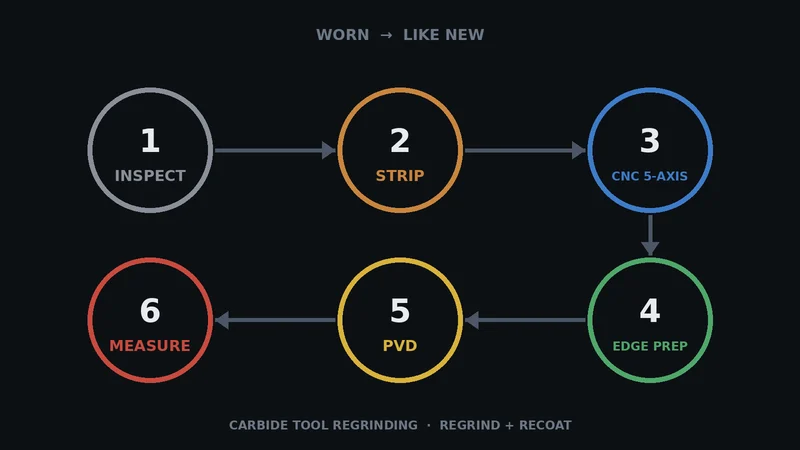
Continuing in aluminium with a mill that is loaded or has a damaged corner spoils both the surface and the next tool. Remove the tool when the edge breaks down, the sound changes or the load becomes uneven. A carbide end mill taken out in time can be reground to its original geometry and used again. Geppetto regrinds and recoats carbide tools of any brand, and reground tools are measured on a ZOLLER Genius 4.
Conclusion
Reducing built-up edge in aluminium means using a polished, high-helix 2–3-flute carbide end mill, a catalogue cutting speed, coolant that actually clears the chip, and timely regrinding. If you share the alloy, diameter and operation, we can help you pick the series and a starting data set: contact us, phone +90 216 394 41 10, WhatsApp +90 537 777 96 44, e-mail info@geppetto-tr.com.
Frequently asked questions
Why do chips stick to the edge when milling aluminium?
Ductile aluminium can weld to the cutting edge when the speed is too low, the edge is dull, or the tool has a low helix, too many flutes or a rough flute face. That deposit is called built-up edge (BUE).
How many flutes should a carbide end mill for aluminium have?
For most jobs, a 2- or 3-flute mill with a high helix and polished flutes is preferred. A 4-flute general-purpose mill designed for steel leaves too little room for the chip.
Should cutting speed be kept low in aluminium?
No. Slowing the speed too much can increase adhesion. In the 2026 catalogue the AS series starting value is Vc = 700 m/min for aluminium with Si < 10%, and Vc = 300 m/min for Si > 10%. Confirm the value on your machine.
Should I use emulsion or air in aluminium?
Generous emulsion usually clears chips better in roughing and pocketing. Compressed air can be used for fine finishing. What matters is that chips leave the pocket instead of packing in it.
What should I do if built-up edge starts?
Check that the tool is suitable for aluminium, bring the cutting speed into the catalogue range, improve chip evacuation and do not keep using a damaged edge. A tool removed in time can be reground.
Can a carbide end mill used in aluminium be reground?
Yes. A carbide end mill taken out before it breaks can be reground to its original geometry. Geppetto regrinds carbide tools of any brand.